
Fury of Anubis RTP, Volatility & Mechanics Explained
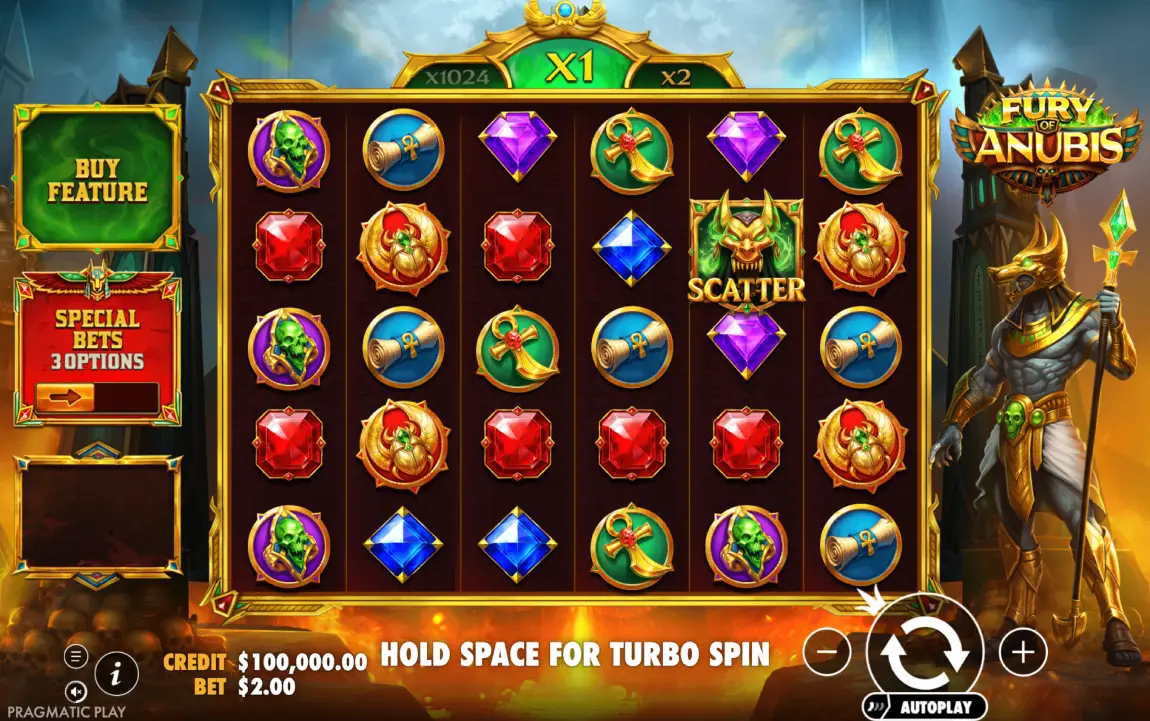
The Fury of Anubis rtp sits in Pragmatic Play's standard high-volatility band, and that single percentage drives almost everything about how the game pays back across thousands of spins. This page breaks the number down: the default return figure, the reduced builds operators can run, scatter trigger rates and what the volatility tier means for your bankroll. For the full Fury of Anubis review with theme, bonus walkthrough and the base mechanics, start at the homepage.
Released on 25 June 2026, this Egyptian-themed slot is one of Pragmatic's newer high-variance titles. If you came here to decide whether the maths suits your session length and stake, you'll find the return-to-player figure, hit frequency and feature-trigger context needed to set realistic expectations before you spin.
Quick Cashouts · Certified & Safe · Adults only · Gamble responsibly
Fury of Anubis RTP: What the Return-to-Player Figure Means
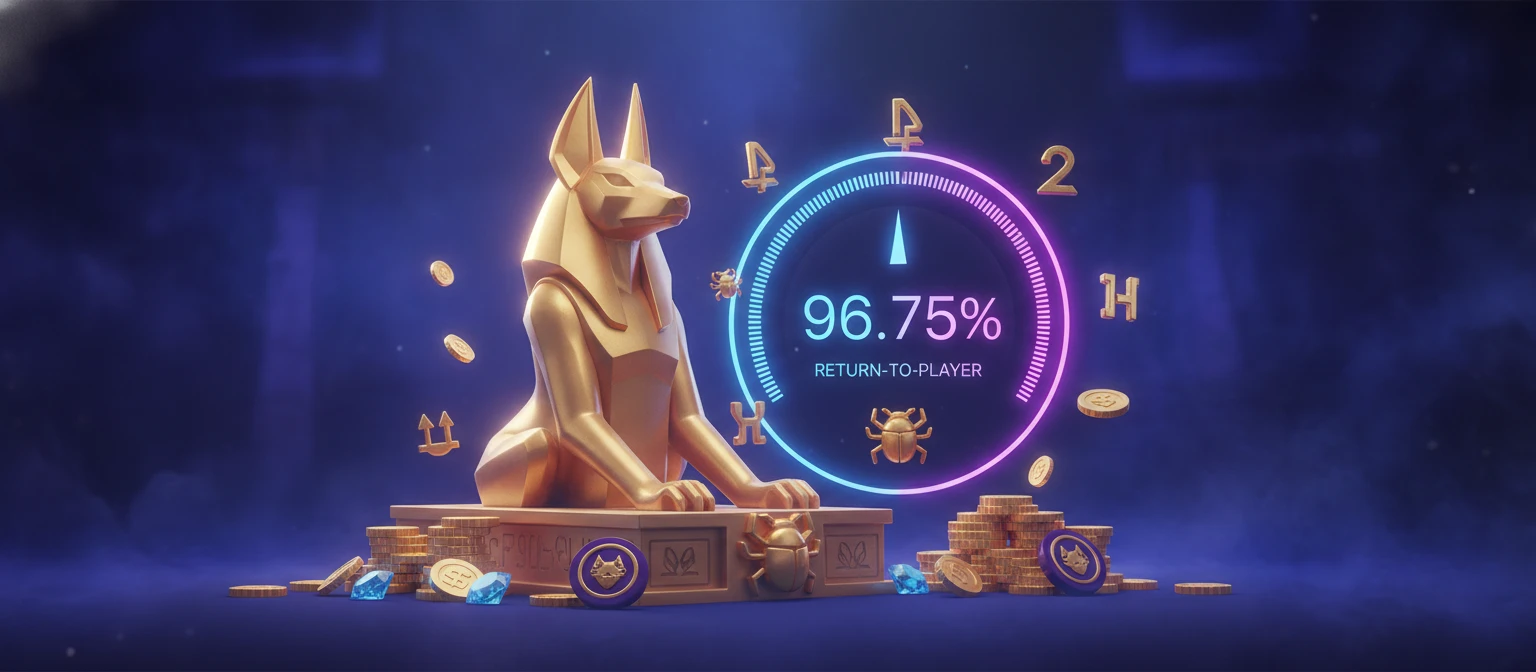
The Fury of Anubis rtp is the theoretical return-to-player figure, the share of all wagered money the game is modelled to pay back over millions of spins. Pragmatic Play's default configuration for this title sits at roughly 96.50%, in line with the studio's standard high-volatility band. For every 100 units staked over the long run, the model returns about 96.50, and the remaining 3.50 is the house edge.
RTP is a long-run average, not a session promise. Over a few hundred spins your actual return can swing far above or below the headline number. The figure describes the game's mathematical design, sampled over a volume no single player will ever reach in one sitting.
rtp Fury of Anubis: default and reduced builds
Here's the part casual players miss: the rtp Fury of Anubis carries is not fixed across every site. Pragmatic ships several certified RTP versions, and operators choose which one to deploy. Alongside the 96.50% default, reduced builds around 95.50% and 94.50% are common at certain casinos. A full percentage point of RTP is real money over a long session, so the same game can quietly pay differently depending on where you load it.
Always check the game info panel before you play. The certified RTP is listed inside the paytable screen, and it is the only reliable confirmation of which build you're spinning. If a casino runs the reduced version, compare the best casinos to play Fury of Anubis and pick a full-RTP build instead.
Is a higher RTP always better?
Higher RTP lowers the house edge, so on paper more is better. The number says nothing about how that return is distributed, though. A 96.50% high-volatility slot pays back the same theoretical amount as a 96.50% low-volatility one, yet delivers it in rarer, larger hits rather than steady small wins. If your bankroll is short, a high-RTP, high-variance game can still drain fast between features. RTP is one input; volatility and hit frequency decide how the session actually feels.
Volatility Level: How Wild Are the Swings?
Fury of Anubis volatility is rated high, which tells you the win distribution is top-heavy: long stretches of small or no payouts punctuated by occasional large hits, most of them tied to the bonus feature. High-variance maths is the studio's signature for this kind of Egyptian title, and it shapes every bankroll decision you make.
Why does the tier matter so much? Because the theoretical return is concentrated, not spread evenly. A meaningful slice of that 96.50% lives inside the free spins round, so the base game often runs cold while you wait. To survive the dry spells you need a deeper bankroll and a smaller per-spin stake than a low-volatility game would demand.
A practical guideline is keeping each spin to around 1% of your session bankroll. That buys enough spins to actually reach the feature where the bulk of the value sits, instead of busting out before the maths has a chance to play out.
- Expect variance: losing streaks of 50–100 spins are normal, not a malfunction.
- Stake down, spin longer: smaller bets stretch the session and your feature-hunting window.
- No timing edge: each spin is independent; the slot has no memory of the last result.
- Set a stop-loss: decide the budget before you load the game, not mid-tilt.
If you prefer frequent small wins and steady play, a high-volatility slot will test your patience, and there are no guarantees the feature lands within any given budget. Learn the base mechanics first in our guide on how to play Fury of Anubis before committing real stakes.
Scatter Frequency & Feature Trigger Rates
Fury of Anubis scatter symbols are the gateway to the free spins round, and their landing rate is what really governs session length on a high-volatility build. In Pragmatic's standard format, landing three or more scatters across the reels triggers the feature, where most of the slot's theoretical return is locked away.
On a high-variance Pragmatic title, a natural feature trigger typically lands somewhere in the region of once every 200–250 spins on average. That is an average across a huge sample, not a countdown, so two triggers can arrive back to back or hundreds of spins apart. The longer the gap, the heavier the base-game grind feels, which is exactly why a deeper bankroll matters here.
Because the feature carries the heavy multipliers, scatter frequency and your effective return are tightly linked. Spins that don't reach the bonus contribute far less to your actual session result than the headline RTP might suggest in isolation.
Fury of Anubis max win chance
The Fury of Anubis max win chance is the long-tail event almost no player ever sees. The top multiplier requires a near-perfect alignment of multipliers inside the feature, and the probability of that stacking out is extremely low. The published cap is a mathematical ceiling, not a realistic target for a single session.
If you want to gauge how often the round actually fires before risking real money, spin the Fury of Anubis free slot demo and count your own triggers across a few hundred spins. The demo runs the same RNG behaviour, so it's the cleanest way to feel the variance without spending a cent.
RTP Comparison: Fury of Anubis vs Pragmatic Play Cluster Peers
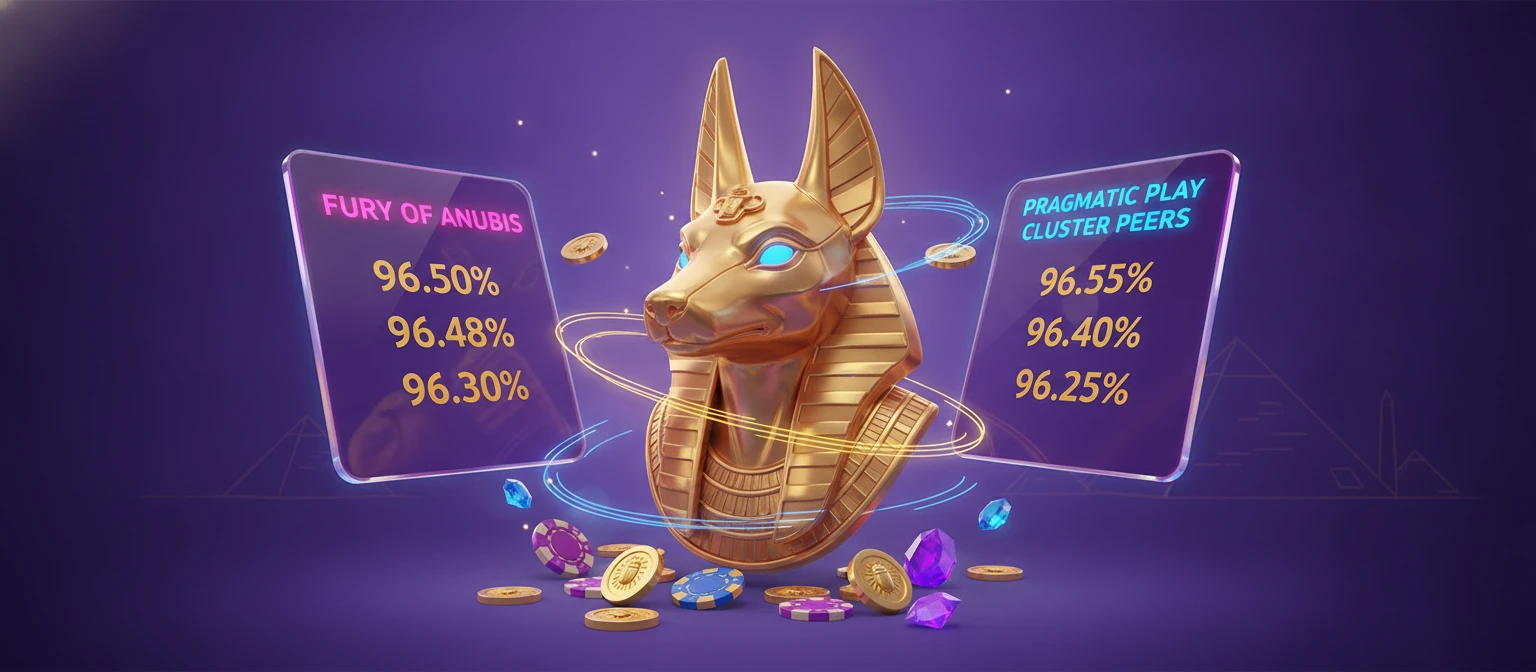
Placing the Fury of Anubis RTP next to Pragmatic Play's other high-volatility releases shows it sits squarely in the studio's house band rather than above or below it. The default 96.50% is the number Pragmatic uses for most of its flagship high-variance slots, so the return profile is familiar territory for anyone who has played the studio's catalogue.
| Slot | Default RTP | Volatility |
|---|---|---|
| Fury of Anubis | 96.50% | High |
| Gates of Olympus | 96.50% | High |
| Sweet Bonanza | 96.51% | High |
| The Dog House | 96.51% | High |
| Sugar Rush | 96.50% | High |
The takeaway: default RTP barely moves across these titles, so it is a weak way to separate them. Volatility tier and feature design are the real differentiators, not a tenth of a percent on the return figure. Where casinos run reduced builds, that gap widens, which is the only place the RTP comparison gets meaningful for your bankroll.
Theoretical return also masks how extreme the upside can be. Observed high-multiplier outcomes cluster far below the published cap, and the rare top-end hits skew the distribution heavily. For recorded high-multiplier results and how they line up against the theoretical ceiling, see the Fury of Anubis big wins page rather than reading them into the RTP figure.
Frequently Asked Questions
What is the RTP of Fury of Anubis?
Pragmatic Play's default configuration publishes around 96.50%, which is the studio's standard high-volatility return. Some operators deploy certified reduced builds near 95.50% or 94.50%, so the live figure depends on the casino. Confirm it in the game's info panel before you play.
Is Fury of Anubis high volatility?
Yes. It is rated high volatility, meaning payouts are infrequent but can be large, with most of the return concentrated in the free spins feature. Expect extended dry spells in the base game and plan your bankroll and stake size accordingly.
How often do scatters trigger the bonus?
Three or more scatters launch the free spins round. On a high-variance Pragmatic slot the natural trigger averages roughly once every 200–250 spins, though that is a long-run average rather than a guaranteed interval. Gaps between features vary widely from one session to the next.
What do "Fury of Anubis 250" and "Fury of Anubis 1000" refer to?
Those numbers are search variants people type when looking for multiplier milestones, such as a 250× or 1000× hit, rather than confirmed separate game versions. At launch there is no published "250" or "1000" sibling title in the spec. For recorded high-multiplier results, check the big wins page.
Can the RTP differ between casinos?
Yes. Pragmatic certifies multiple RTP builds and lets operators choose which to run. The same game can show 96.50% at one site and a reduced figure at another. The certified value inside the paytable screen is the only reliable source, so always verify it before staking real money.
Does a higher RTP guarantee more wins?
No. Higher RTP lowers the house edge over the long run, but it does not change how wins are distributed within a session. On a high-volatility slot the return arrives in rare, larger hits, so results stay swingy regardless of the headline percentage. RTP shapes the long-term average, not any single sitting.
See the maths in motion
Load Fury of Anubis at a full-RTP casino and test the volatility against your own bankroll plan.